Showing posts with label cost. Show all posts

Friday, September 23, 2016

SSU participates in cyber security research

SAVANNAH – Savannah State University’s (SSU) Qian Chen, Ph.D., assistant professor of computer science technology, and two students completed a summer research project aimed at protecting infrastructure. Chen was joined by Summer Sykes, a senior electronics engineering technology student from Atlanta, Ga., and Chelsea Calhoun, a senior in computer science technology from Jacksonville, Fla.


(L-R) Jeff Nichols, Ph.D., SSU student Summer Sykes, SSU student Chelsea Calhoun, Qian Chen, Ph.D., and PhD candidate Jarilyn Hernandez (West Virginia University) at ORNL.

The SSU team worked at the Oak Ridge National Laboratory (ORNL) to design and test a method for companies to know a cyber attack is affecting a supervisory control and data acquisition (SCADA) system. Many of the nation’s large industries and manufacturers – oil companies, wastewater facilities, electrical grids, large communication networks – use SCADA systems to remotely operate multiple locations from a single place.

SCADA systems are prime targets for cyber attacks and, according to one study, have doubled over the past year; yet, more than 30% of organizations did not know their SCADA system had even been breached.

The research conducted by Chen, Sykes and Calhoun designed a technique with high detection accuracy. Their process monitors, tracks and compares the power consumption during normal activity and during an attack. The SCADA systems can now be programmed to sense the spike in power consumption, detect a threat and alert an organization.

Chen will present the findings at the Hawaii International Conference on System Sciences 50.

Established in 1890, Savannah State University is the oldest public historically black college or university in Georgia and the oldest institution of higher learning in the city of Savannah. The university’s 4,800 students select majors from 30 undergraduate and six graduate programs in three colleges — Liberal Arts and Social Sciences, Business Administration and Sciences and Technology — and the School of Teacher Education.

-- SSU --

Tuesday, September 6, 2016

SSU professor assists in sea turtle hatching

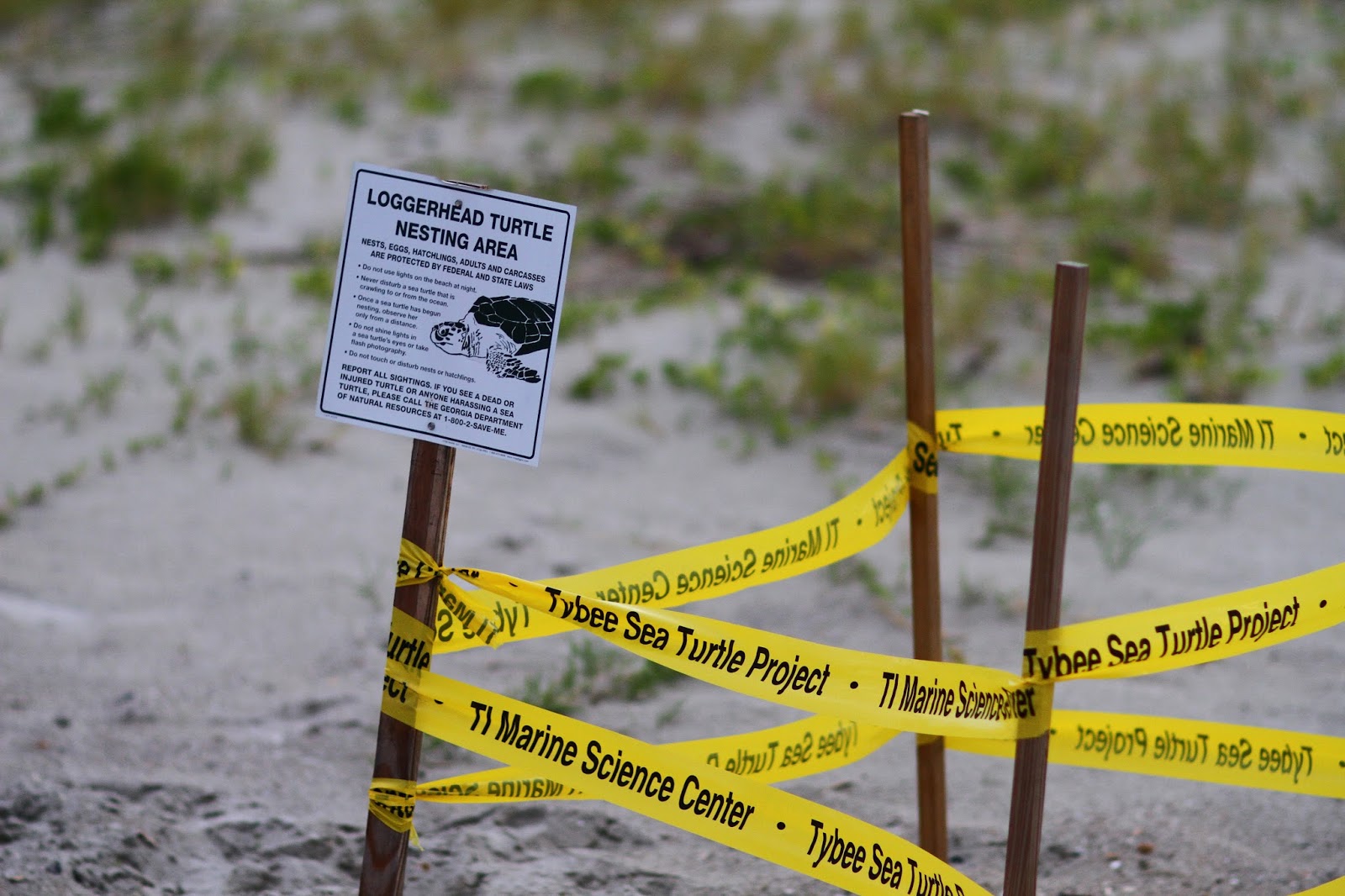
SAVANNAH – Savannah State University’s (SSU) Christopher Hintz, Ph.D., professor of marine sciences, led a team of volunteers with the Tybee Sea Turtle Project this summer.


The Tybee Sea Turtle Project is a volunteer organization permitted by the Georgia Department of Natural Resources (DNR) to monitor and assist nesting sea turtles on Tybee, a developed barrier island. Every day in the summer, volunteers walk the three-mile long beach looking for turtle crawls, evidence of a sea turtle nest.

At the end of the incubation period, the volunteers sit by the nests, particularly in highly impacted areas of Tybee Island, to ensure the hatching turtles are oriented properly and make it to the ocean. Hintz participates regularly in the project’s activities and outreach opportunities. The volunteers have assisted in the release of more than 40 hatchling sea turtles that had not emerged by day five and were at risk of perishing in the nest.


Nationwide, sea turtle nests are at a record high for the 2016 season, including record numbers in the states of Georgia, Florida and South Carolina. The hatching period runs from May 1 – October 31. The best way citizens can protect sea turtles is to reduce artificial lights (e.g., flashlights or cell phones) on the beach at night, and turn off any lights on beachfront properties as soon as it is dark.

Established in 1890, Savannah State University is the oldest public historically black college or university in Georgia and the oldest institution of higher learning in the city of Savannah. The university’s 4,800 students select majors from 30 undergraduate and six graduate programs in three colleges — Liberal Arts and Social Sciences, Business Administration and Sciences and Technology — and the School of Teacher Education.

-- SSU --

Friday, July 22, 2016

SSU alumna wins naval maneuver competition


Savannah State University (SSU) alumna Ensign Shunsey Brooks won the Distinguished Shiphandler Competition in May 2016 at Basic Division Officer Course (BDOC) in Norfolk, Va.

Approximately 20 ensigns participated and three U.S. Navy captains judged the event. During the competition the ensigns briefed the captains on their plans then demonstrated their ship handling skills on a simulated system. The goal was to safely dock the ship, an LSD 43, on the pier in Norfolk while dealing with unfavorable environmental variables such as heavy winds and current.

“This means I have represented NROTC and Savannah State University well,” Brooks said, “which is enough to make me feel really proud. And I was the first person to win this competition with my ship platform (LSD 43).”

Brooks, a biology major from Vidalia, Ga., graduated from SSU in December 2015 and is currently stationed on the USS Fort McHenry (LSD 43) in Mayport, Fla. As the Assistant Communications Officer she works in radio communications and is in charge of information technicians. Her division is responsible for ensuring all communications aboard the ship are functioning.

Tuesday, May 31, 2016

A Dolphin Tale

A DOLPHIN TALE
This article originally appeared in the 2015 edition of ARISING: The Research Journal of Savannah State University

When a dolphin washed ashore on Tybee Island in early February, it could have been another heart-wrenching tale of an animal meeting a tragic end. But thanks to Savannah State University’s Marine Mammal Program, the death of the bottlenose dolphin known as Phineas will become a teachable moment.

Led by Tara Cox, Ph.D., an associate professor of marine sciences, the Savannah State Marine Mammal Program had been tracking Phineas since 2009. The program is funded through several grants at the university, including the Title VII, National Science Foundation Enhancing Diversity in Geoscience Education (EDGE), Bridge to Research in Marine Sciences Research for Undergraduates (REU) and Students Engaged in Naval STEM Research (SENSR) programs, among others.

Eleven undergraduate and three graduate students from the various grant programs currently serve as interns in the Marine Mammal Program. The students assist faculty with tracking the local dolphin population in Savannah-area waterways, then map their results back in the SSU Dolphin Sciences Lab.


Student interns in SSU’s Marine Mammal Program spend time on the water and in the lab. (Clockwise from top) Cody Rigney, a junior marine sciences major, studies distribution of dolphins. Associate Professor of Marine Sciences Tara Cox, Ph.D., is director of the Marine Mammal Program. Rachael Randall, a graduate student in marine sciences, spends time in the lab analyzing dolphin blubber for stable isotope ratios. Cassandra Harris, a sophomore marine sciences major, is working to reassess human interaction rates of bottlenose dolphins.

The SSU Marine Mammal team had spotted Phineas at least 16 times over the past five years, tracking the adventurous mammal as he swam around Tybee Island and up and down the Bull River. Beachgoers found Phineas’ body on Tybee’s north beach and contacted local authorities. The Georgia Department of Natural Resources was called in and performed the necropsy with assistance from SSU students and staff. The DNR then shared the deceased dolphin’s picture to its local stranding network, of which Savannah State is a part.

“When they did the necropsy, the dorsal fin was in really good shape,” explains Cox. “We identify animals by unique patterns of nicks and notches on their dorsal fins. My lab manager Robin Perrtree immediately recognized that it was one of our animals.”

Cox hopes that the lab results from Phineas’ necropsy will shed some light on why the dolphin was so emaciated and sickly when he washed ashore. The samples taken during the necropsy are currently being tested for a variety of illnesses including brucellosis, a bacterial infection, and morbillivirus, an illness similar to the human form of measles.

While disease may have been the cause of Phineas’ death, other dolphins in the area face challenges brought on by humans. Through their research, Cox and her team have discovered that the Savannah area has the world’s worst begging problem.

“We see dolphins begging about two-thirds of our days on the water and about a quarter of our sightings,” explains Cox, who developed five metrics to compare dolphins in the Savannah area to those in other dolphin hotspots around the world.

Begging poses a danger to dolphins, which are at risk for injury when they swim so closely to boats. The human snacks that boaters often feed dolphins can also harm the popular mammals.

Cassandra Harris, a sophomore marine sciences major from Stone Mountain, Ga., is currently working in the Marine Mammal Program to reassess human interaction with the local bottlenose dolphin population, updating research that was conducted by Perrtree over the last several years. Harris, who has been intrigued by dolphins since she visited Sea World as a child, is chronicling the number of begging events per sighting and per day, as well as the number of human interactions per sighting and per day.

Harris’ research will help Cox and her team understand the extent of dolphin-human interaction in the area. “My ultimate goal is to affect policy with our science,” says Cox, explaining that members of the National Oceanic and Atmospheric Administration (NOAA) came to Savannah a few years ago to observe the waterways and conduct outreach. Cox and her team also regularly visit schools and talk to local fishermen in hopes of discouraging people from feeding dolphins.

“It looks like there has been a slow decline [in begging],” Cox says. “It’s hard to say why, but we’re getting news articles out, we’re doing outreach and there’s been some enforcement. That may be making a difference.”

Harris’ research will be presented at a conference this spring and will be an important step in addressing and understanding the issues facing the local population, something that will help protect dolphins like Phineas for years to come.

Monday, March 28, 2016

Alumni Spotlight: Kelvin Frazier, Ph.D.

“Kelvin Frazier” originally appeared in the 2016 edition of Arising, the Research Journal of Savannah State University.
Story by Amy Pine. Photography by Hon Low.


Kelvin Frazier, Ph.D., was a fixture on campus during his undergraduate days at Savannah State University, conducting research in labs alongside professors, playing trombone in the SSU marching band and serving as a founding member of the Golden Key International Honor Society. Today Frazier, who received a Ph.D. from the Massachusetts Institute of Technology (MIT) in 2015, makes it a priority to visit campus and share his experiences with current students.

“Dr. Frazier is the epitome of the phrase ‘Seriously Impressive’,” says SSU President Cheryl D. Dozier. “His successes both in and out of the classroom serve as a model for our students and alumni, demonstrating the value of hard work, determination and family support. He is also a stellar example of the importance of engaging students in research and grant-funded programs.”

Frazier, a Savannah native who graduated from Windsor Forest High School, was a participant in SSU’s National Science Foundation-funded Minority Access for Graduate Education and Careers in STEM Program (MAGEC-STEM), a grant program focused on increasing the number of minority students who successfully complete their undergraduate degrees and continue on to advanced degree programs.

Through MAGEC-STEM, Frazier engaged in research with his faculty mentor Cecil Jones, Ph.D., an associate professor of chemistry, analyzing ways to enhance the use of fluorescence in photodynamic therapy, a key component in some cancer treatments.

Through MAGEC-STEM, Frazier had the opportunity to present his research at numerous conferences around the country and engage in off-campus research at the University of Connecticut and at Procter & Gamble.

“My experiences helped me branch out my network and taught me basic skills I needed in order to succeed in graduate school,” says Frazier, who graduated magna cum laude from Savannah State in 2010 with a dual degree in chemistry and mathematics.

At his graduation ceremony, Frazier received one of the university’s highest honors, the President’s Second Mile Award, an award presented biannually to SSU students in recognition of stellar and meritorious achievement. He went on to matriculate at MIT in Boston, where he worked toward a Ph.D. in physical chemistry.

Frazier says that the research skills he acquired at Savannah State served him well during his five years at MIT, one of the  world’s most prestigious universities.

“Getting in to graduate school, you have to have quality research, and my research advisor (at MIT) looked at my application and saw the research skills I had developed (at SSU), and that’s why he wanted me in his lab,” Frazier says.

Frazier’s abilities stood out at MIT. He received a Provost Presidential Fellowship, the highest fellowship honor for first-year graduate students, and the university’s Dr. Martin Luther King Jr. Leadership Award, an award in which recipients compete against the entire MIT community.

In addition to garnering accolades, Frazier became deeply involved in the campus community, serving as president of the Black Graduate Student Association and the Academy of Courageous Minority Engineers.

“Savannah State made me very grounded. Who I was at Savannah State is who I was at MIT,” Frazier says. “People really appreciated that. Some of the things I was doing at Savannah State, like trying to build a community if I felt there was a gap, I took with me to MIT.”

Today Frazier continues to live in the Boston area, working as a business and systems integration analyst for Accenture, a global consulting and professional services company. He hopes to one day start his own bio-medical firm or even open his own hospital.

Friday, March 25, 2016

Student Voices: Blessing Enya


“Blessing Enya” originally appeared in the 2016 edition of Arising, the Research Journal of Savannah State University.
Story by Amy Pine. Photography by Hon Low.


am originally from Nigeria, but I have been in the United States for the past six years. After completing high school in Atlanta, I decided to attend Savannah State University as an undergraduate at age 15.

Being accepted to Savannah State University at such a young age made me a little nervous because I did not know what to expect, and I felt like I was a little child in an adult world. For the longest time, 
I avoided telling anybody my age because I felt like I might be picked on as a result. At the end of the day, people were actually nice and helpful. It was important to me that I try to fit in as much as I could, without forgetting where I came from. My parents were always there to support and help me in any way they could, and it has helped me become the adult I am now at Savannah State University.

During my freshman year, I was a Peach State Louis Stokes Alliance for Minority Participation (PSLSAMP) Scholar, and I did my first research with Hyounkyun Oh, Ph.D., a mathematics professor, on historical trends and predictions in Savannah’s temperature. The main goal of the project was to predict the temperature in Savannah using regression method, predictive method and Fast Fourier Transform method and compare the temperatures within a 30- and a 60-year period.
By my sophomore year, I joined the National Institutes of Health Research Initiative for Scientific Enhancement (NIH-RISE) program and worked under Hua Zhao, Ph.D., an associate professor and chair of chemistry, doing research on biodiesel.

By Summer 2013, I got accepted to my first off-campus research position at the University of Texas at San Antonio, where I had the opportunity to work with Janakiram Seshu, Ph.D., an associate professor of biology, on a research project titled “Purification of BB0504 Protein of Borrelia Burgdorferi,” which involved converting DNA to protein and purifying the protein.

I completed my second off-campus research at Alabama State University on “Detection of Avian Influenza Virus (AIV) Using qPCR.” This research involved RNA isolation from bird fecal sample, converting to cDNA and quantifying the cDNA to detect AIV.

Presently I am working with Takayuki Nitta, Ph.D., an assistant professor of biology at Savannah State, on MLV virus and the how small GTPases play a role in virus release. I have presented my research experiences at the Annual Biomedical Research Conference for Minority Students, the PSLSAMP conference, the Mathematical Association of America Southeastern Section conference, the Florida-Georgia Louis Stokes Alliance for Minority Participation conference and the Emerging Researchers National Conference in STEM.

All of these research opportunities have helped me understand more about what is being taught in my classes. They have also helped me with my networking skills and helped determine my plans for the future.

My future goal is to get my M.D./Ph.D. degree in microbiology, and I believe that Savannah State University has helped me achieve my goals. I have been exposed to summer research opportunities, networking opportunities, graduate school seminars and scholarship opportunities that I would not have gotten at other schools. I have told people around me about the kinds of opportunities to which I have been exposed, and they have also had the same experience.

As a result of these opportunities and experiences I have received at Savannah State University, I believe I am Savannah Smart, Savannah Bold and Savannah Proud, and I can get anywhere from here.

Wednesday, March 23, 2016

True Chemistry

"True Chemistry" originally appeared in the 2016 edition of Arising, the Research Journal of Savannah State University. 
Story by Amy Pine. Photography by Hon Low.


In a chemistry lab at Savannah State University, Zakiya Barnes works with her faculty mentor, Pascal Binda, Ph.D., to conduct polymer research on the formation of biodegradable polyesters. Barnes, a senior chemistry major from Wichita, Kan., hopes the high-level research will help her reach her ultimate goal of joining the U.S. Navy’s Nuclear Propulsion Officer Candidate program (NUPOC).


“(The NUPOC) program is one of the most intellectually challenging in the nuclear field,” says Barnes, a self-proclaimed humanitarian who wants to protect her country’s liberty by serving in the Navy’s nuclear division. “The skills that I acquire in Dr. Binda’s lab really give me an advantage; I can apply the lab techniques and methods that I am learning now to the work I hope to do with the U.S Navy.”


Pascal Binda, Ph.D., (second from left), with his research assistants (from left to right) Zakiya Barnes, DeChristian Guthrie and Rasaan Ford. 


Barnes is one of several SSU students working on U.S. Department of Defense-funded grant research with Binda and his colleague Kai Shen, Ph.D. The College of Sciences and Technology (COST) faculty members each received a grant from the Department of Defense (DOD) Army Research Office in 2015. 


“To have two of our faculty members receive a U.S. Department of Defense grant at the same time speaks volumes about the caliber of the faculty that we’re bringing in to the college and what we’re doing in terms of advancing research and instruction for our students,” says COST Dean Jonathan Lambright, Ph.D. “One of the most important things is that both of these faculty members are well known for involving their undergraduate students in their research work.” 


Binda, an assistant professor of chemistry, received a three-year, $332,633 grant from the DOD to develop a cross-linkable biodegradable polyester using a lanthanide catalytic system. If synthesized properly, the new fabric may have the ability to retain its shape, even when manipulated. 


“Cross-linking polymer can help the military in many ways because of its shape memory. It can undergo high compression forces and extension and still regain its shape,” Binda explains.  “The ring-opening homopolymerization of alpha-methylene gamma butyrolactones has not been reported in literature.”


Boat hulls and pipes are just some of the potential uses for this new “smart” material, which could be utilized in both military and civilian populations. Binda says the cross-linking process could also be used to improve other materials such as Kevlar. 


To help develop the new smart material, Binda has enlisted Barnes and two other Savannah State students to assist with his research. Since joining Binda in his lab, the student researchers have conducted experiments on the formation of biodegradable polyester and have tested and used two different methods for forming the catalyst.


Barnes utilizes a glove box in Binda's box.

For Rasaan Ford, a sophomore chemistry major from Bronx, N.Y., the experience has not only given him invaluable research experience, it has also challenged him to find innovative solutions to new and recurring problems. 


“The methods learned and reactions performed have given me the opportunity to expand my view of how the knowledge of chemistry can be applied,” says Ford, who plans to pursue a Ph.D. in the field. “This research has really given me the chance to think about a problem in a group and construct many different methods as a means to solve the issue, as well as expand my horizons and knowledge of chemistry.”


DeChristian Guthrie, a senior chemistry major from Atlanta, hopes to one day put the research skills she’s learning in Binda’s lab to use as a chemist for a major cosmetics company. “Gaining experience as an undergraduate research assistant will be instrumental to my growth as a chemist of the highest quality,” she says.


The students not only assist Binda with his research, they also have an opportunity to attend conferences and present their research. Though they receive stipends for the time they spend in Binda’s lab, what they gain from the collaborative research with their faculty mentor is immeasurable.


“You need to learn how to work as a team and how to contribute to your team and communicate your ideas. You need to learn to think outside the box,” says Binda. “The student researchers learn the skills they need to succeed in the scientific community. (They learn to) review literature and to understand how to solve a problem when it arises using chemical knowledge that is learned from the university.”


Binda and his student researchers are currently working on the first phase of research. During the second phase of the project, Binda will utilize the gamma ray facility at Oak Ridge National Laboratory in Oak Ridge, Tenn., one of his collaborators on the project. 


Down the hall in a different chemistry lab in the Drew-Griffith science building, Shen and his student research assistants are working on a second U.S. Department of Defense grant. Shen received a three-year, $320,972 grant to study the role of proteins such as metavinculin in cellular function.


Shen (center) with his DOD grant research assistants and other student research assistants (from left to right): Terrence Cumby, Raven Kessie, Edonna Johnson, Sakura McLaughlin (seated), Tiffany Villanueva, Rayne Clarrke, and LaTanya Downer. 


Metavinculin is a protein believed to play a critical role in cells sensing and responding to mechanical forces in their physical environment, from neighboring cells to physical stress. 


The grant will enable Shen, his co-Principal Investigator Karla-Sue Marriott, Ph.D., associate professor of chemistry and forensic science, and five student researchers to better understand the sophisticated regulation of cell responses to mechanical forces.


“We want to look at what the mechanism is for the cell to sense and respond to (the) force (of metavinculin and other proteins),” says Shen, explaining that the DOD can utilize his research as a basis for designing and fabricating novel sensor systems for military applications. 


To help facilitate his research, Shen is collaborating with the U.S. Department of Energy, which has granted him access to the Argonne National Laboratory (ANL) in Chicago. Shen will utilize the lab’s Advanced Photon Source — one of the brightest x-ray beams in the world — to analyze interactions between metavinculin and other focal adhesion proteins in the cellular system. Shen will also have access to the ANL’s Mira supercomputer, which will enable him to simulate the complex cell signaling system.


Meanwhile back at Savannah State, Shen is working closely with his student researchers, who are utilizing high-tech lab equipment to investigate complex protein structures. The students have access to both a small-angle X-ray scattering and a Horiba Raman microscope, an instrument equipped with an ultra violet laser that enables them to analyze protein structure changes. The university acquired the high-resolution Raman microscope thanks to a $331,997 U.S. Department of Defense/Army Research Office grant Shen and his colleagues received in 2014.


Tiffany Villanueva and Edonna Johnson conduct research in Shen's lab.

Like Binda’s student researchers, the students working alongside Shen receive a stipend for their work, attend conferences and present their research. The experience is invaluable as students prepare to enter graduate programs and pursue careers in the field.


LaTanya Downer, a senior chemistry major from Atlanta, says that the opportunity to work on Shen’s DOD grant will help prepare her for a doctoral degree in analytical chemistry by familiarizing her with graduate-level research and teaching her how to conduct literature review — a key component in doctoral degree programs. 


“Working as a research assistant will benefit both my academic and professional career because it will provide necessary research methodology training and practical research experience, giving me a competitive advantage to start my career,” Downer says.  


Savannahian Tiffany Villanueva, a senior forensic science major with a concentration in chemistry, believes her work studying the role of metavinculin will help her reach her goal of receiving a Ph.D. in biochemistry. 


“(Working on the grant) most definitely already has benefited my academic and professional career. (It) has taught me the responsibility of conducting research, while learning how to better manage time. Additionally, working on this grant has also allowed me to obtain new skills in the lab, while allowing me to better perfect previously learned ones,” Villanueva says.


One of the most unique components of both Shen’s and Binda’s DOD grants is the forthcoming high school internship program. Both professors will select two high school students each to assist them with research. The students will spend eight weeks during the summer conducting research on the respective grant programs and will receive a stipend for their work.


“You start from high school, build the pipelines and you get them involved early in STEM research so that students can streamline into SSU,” Shen says.


Adds Binda, “You can only imagine how high school students can come and see the fancy things that we’re doing in science, and they’ll say, ‘Wow, I can do research.’” 

Tuesday, March 22, 2016

Equation for Success

“Equation for Success” originally appeared in the 2016 edition of Arising, the Research Journal of Savannah State University. 
Story by Amy Pine. Photography by Hon Low.

When Kimberly Jones Knight teaches Foundations of Algebra and Coordinate Algebra to 9th graders at Druid Hills High School in Atlanta, she can easily spot students who are struggling and knows how to help them.

“I can see the common errors among the students and understand why because I have such in-depth knowledge of how complex yet simple some mathematical concepts are,” Knight says.

Knight attributes her ability to help her students to the education she received as an undergraduate mathematics major at Savannah State University.

“The mathematics program at SSU more than prepared me for teaching,” says Knight, who graduated from SSU summa cum laude in 2008 and went on to receive a master’s degree in math education from Georgia State University in 2010.

Savannah State’s mathematics program has produced graduates like Knight since the university began conferring degrees in the discipline in 1949. The program has grown in popularity over the past six decades, with 99 declared majors today.

“This number is comparable to the number of math majors in significantly larger research universities,” says Mulatu Lemma, Ph.D., professor and chair of SSU’s mathematics  department. “SSU is now ranked No. 6 in the nation for producing African-American math and statistics B.S. graduates.”

One of the reasons for the department’s success is the quality of research being produced by both faculty and students. Faculty members are actively engaged in scholarly research activities throughout the year, present their findings at international and national conferences, and regularly publish their work in peer-reviewed journals.

Mathematics majors have the opportunity to engage in research through coursework and grant programs such as the Minority Access for Graduate Education and Careers in STEM program (MAGEC-STEM), which seeks to increase the number of minority students who progress to advanced degree programs.

Mulatu Lemma, Ph.D., with students from his topography class.

Knight says that her experience as a MAGEC-STEM scholar helped prepare her for the rigors of graduate school.

“I was well prepared for Georgia State’s math education program. It is a research-based learning school and I did research every year at SSU through MAGEC-STEM,” Knight says.

Soon SSU students and those from other colleges and universities will have an opportunity to pursue a master’s degree in mathematics on Savannah State’s campus. The University System of Georgia Board of Regents approved a master of science degree program in mathematics, which will launch in Fall 2016.

The creation of the master’s degree program was one of several goals set forth by College of Sciences and Technology Dean Jonathan Lambright, Ph.D., who credits Lemma with paving the way for the new degree program.

“This wouldn’t have been possible without the assistance and leadership of Dr. Lemma,” Lambright says. “He’s really the driving force behind it. He’s such a wonderful faculty member, he’s extremely dedicated to his profession and he loves teaching students. He wants to see the program progress.”

Lambright says the response to the new graduate program has been strong, with many prospective students inquiring about admission. Faculty members are currently completing the development of courses, and the department is actively recruiting students. Once operational, the program will be the only advanced degree program in mathematics in the Savannah area.

Thursday, October 29, 2015

Savannah State students release oceanography trackers


Drifter deployment
© 2015 SSU Marine Sciences

Drifters were designed and built by students

SAVANNAH – Students in the new graduate Advanced Oceanographic Instruments and undergraduate Oceanographic Instruments courses deployed two surface current drifters using Savannah State University's (SSU) research vessel Margaret C. Robinson on Friday, October 16.

In classes leading up to the deployment both the undergraduate and graduate students built the biodegradable drifters from bamboo and canvas. The graduate students devised the experiment to deploy in the historic floodwaters flowing out of the Edisto River, South Carolina, and into the coastal ocean.

“This real-life experience in experimental development, instrumental design and construction is key for our students to gain while at SSU so they can apply this knowledge out in the workforce or graduate school after graduation,” says Christopher Hintz, Ph.D., associate professor in marine and environmental sciences.

The positions are captured by GPS and the data is sent by satellite to ground based data storage approximately every 6 hours. The drifters are designed to stay afloat for several months. Rachael Randall, a graduate student in the marines sciences program, says, “One of the coolest things about this project was resurrecting skills we thought we would never use working in marine science, like sewing, and actually making an instrument that is reliable enough to support a really expensive satellite transmitter.”

The class took the drifters out in the early morning hours and had calm seas. “The deployment of the drifters was an exciting experience,” says student Nick Castellane. “A good amount of effort went into making these, and knowing the information received will contribute to the scientific community the world over is beyond gratifying.”

Though the drifters only report their positions, the information can be combined with data from the Integrated Ocean Observing System (IOOS). SSU’s classes are also using salinity and wind data from the Fripp Island NOAA Buoy to correlate the floodwater current movements with other factors in the area. “This is a real-world example of how oceanographers can use the multitude of oceanographic instruments and data available to understand regional to global scale processes,” Hintz adds.

Track the drifters.

Established in 1890, Savannah State University is the oldest public historically black college or university in Georgia and the oldest institution of higher learning in the city of Savannah. The university’s 4,900 students select majors from 27 undergraduate and five graduate programs in three colleges — Liberal Arts and Social Sciences, Business Administration and Sciences and Technology — and the School of Teacher Education.


Media Inquiries: email Loretta Heyward at heywardl@savannahstate.edu or call her at: (912) 358-3049.

-- SSU --

Monday, July 6, 2015

Student Spotlight : Phillip Prince

Phillip Prince
"I am a biology major with a concentration in secondary education, and I was awarded a scholarship for the 2014-2015 academic year. Your giving is not only an investment to the university, but also, an investment in students like me."

"The scholarship has had a great impact in my academic career. I was able to purchase additional study materials and software that helped me with my studies. I started the semester strong, and I will continue to be diligent, consistent and patient in my study time as well as with my organizational responsibilities (SSUGAE, and Collegiate 100)."

"Being a scholarship recipient from my University is a beacon of hope for me and other students, which will allow us to continue to excel and pursue our career goals. I am extremely grateful for the Alumni and the work that they do, and I am honored to be a scholarship recipient."

Phillip attributes the scholarship he received, and the opportunities it afforded him, to getting one step closer to his dream of pursuing a Doctorate in Dental Medicine.

Student Spotlight : Kierra Hill

Kierra Hill
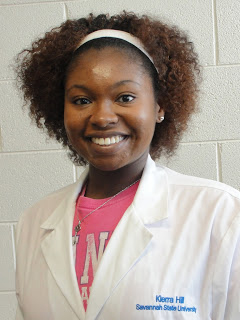
"My name is Kierra Hill, and I am a biology major in the College of Sciences and Technology (COST). I am a recipient of the MAGEC-STEM PLUS Scholarship, and I receive financial aid."

"Financial aid is a fundamental part of my matriculation here at Savannah State. Without the combination of my scholarship and financial aid, I would not be able to fund my education, and ultimately, attain my dream of becoming a neurologist. I am grateful for the opportunities afforded to me by my scholarship, as well as financial aid."

Through the MAGEC-STEM PLUS program, Kierra has been able to conduct research in the field of chemistry overseas in one of the most prestigious universities in China; Tianjin University, in Tianjin, China. She is a firm believer that aid in any form, whether it be in the form of a scholarship or financial aid, is very important in the success of a student determined to reach his or her goal of graduating.

Wednesday, June 10, 2015

From Savannah to Fearless


Never be afraid. Dr. Mulatu Lemma refuses to let you fear what you don’t understand. Perhaps that’s why this expert mathematician, author, and innovative researcher was named the 2013 Georgia Professor of the Year by the Carnegie Foundation for the Advancement of Teaching and the Council for Advancement and Support of Education (CASE). Just 36 professors across the nation were honored. Dr. Lemma was one of them.

While he’s known for discovering his Mulatu Numbers, an integral sequence of numbers with distinct mathematical properties and patterns (think Fibonacci numbers), he considers his greatest achievement what he creates with his students.

Dr. Lemma worked for more than three years investigating the Mulatu Numbers (producing more than 13 theorems along the way). He used that work as a teaching exercise for his students. They explored numbers—together. And the students who worked alongside him went on to present their work at national conferences.

A native of Ethiopia and graduate of Addis Ababa University and Kent State University, Dr. Lemma has helped students discover the beauty and power of math at Savannah State University since 1994.
In 2010, he received the Savannah State University Distinguished Professors Award for outstanding teaching, research, and services. Dr. Lemma is also one of the most awarded professors in Georgia.

Dr. Lemma is relentless. Tenacious. And has never met a problem that he didn’t want to solve. He challenges his students to live and study with the same single-minded determination he uses to crack equations. Students must rise to meet his challenge. And they do. Seriously Impressive.

Monday, June 8, 2015

Student Spotlight : Enow Ayuk

Enow Ayuk
Enow came to Savannah State University to pursue his goal of becoming a neurosurgeon.

Enow's grandfather - his inspiration - was an enthusiastic advocate of Enow's studies. He began showing signs of Alzheimer's, and after he passed in 2013, Enow was faced with an unsure academic future.

Before coming to Savannah State, Enow sat out for two semesters, unable to raise enough in financial aid to return to school.

In those months, he rededicated himself to his passion for science and decided he would work towards finding a cure for Alzheimer's once he returned to school.

Aware of the challenges ahead, he studied during the summer to be sure he was ready for fall. Enow became a Peach State Louis Stokes Alliance for Minority Participations (PSLSAMP) scholar and accepted Hope, research, and presidential scholarships.

It wasn't easy at first, but he realized that the opportunities are endless here at SSU.

This summer, Enow will study antibiotic-resistant bacteria through a research program at Alabama State.

And he knows that with determination and drive, anything is possible.

Friday, January 2, 2015

Federal Research Permits Granted

Assistant Professor Tara Cox in marine sciences has been granted continuing permits for the study of bottlenose dolphins. The federal permits are required to carry out research that results in interaction with marine mammals.

These renewals allow professors and students to:
to conduct close approach, photo-identification, behavioral observations, passive acoustics, and focal follows of coastal and offshore bottlenose dolphins, Atlantic and pantropical spotted dolphins, short-finned pilot whales, beaked whales, and Risso's dolphins in estuarine and coastal waters of Georgia and South Carolina. The study is designed to continue research on dolphin-human interactions related to coastal fisheries, foraging ecology, and social structure of the local bottlenose dolphins.
Read the entire notice from the National Oceanic and Atmospheric Administration (NOAA) and SSU's marine science research project here.