Showing posts with label biology. Show all posts

Tuesday, September 6, 2016

SSU professor assists in sea turtle hatching

SAVANNAH – Savannah State University’s (SSU) Christopher Hintz, Ph.D., professor of marine sciences, led a team of volunteers with the Tybee Sea Turtle Project this summer.


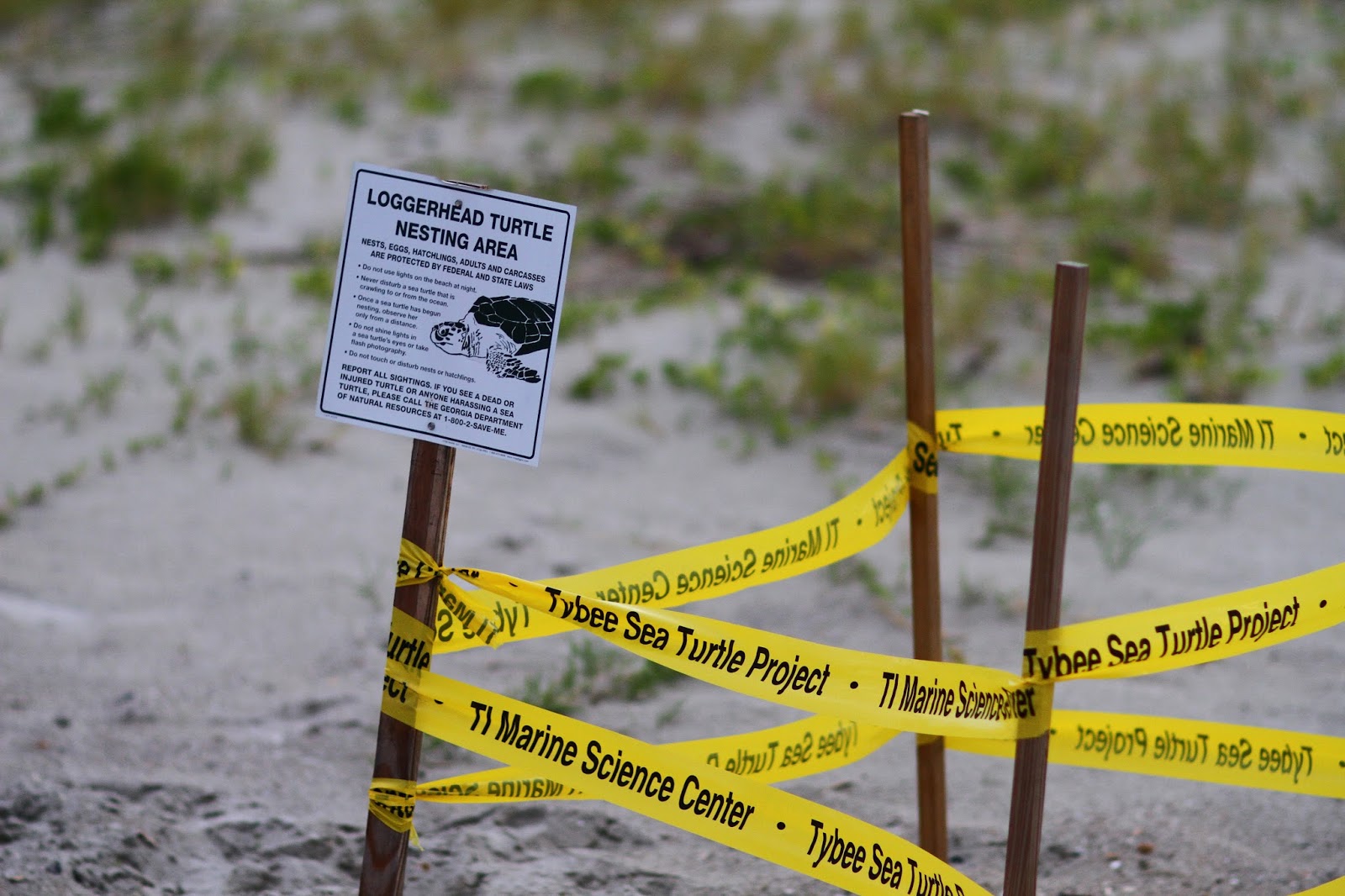
The Tybee Sea Turtle Project is a volunteer organization permitted by the Georgia Department of Natural Resources (DNR) to monitor and assist nesting sea turtles on Tybee, a developed barrier island. Every day in the summer, volunteers walk the three-mile long beach looking for turtle crawls, evidence of a sea turtle nest.

At the end of the incubation period, the volunteers sit by the nests, particularly in highly impacted areas of Tybee Island, to ensure the hatching turtles are oriented properly and make it to the ocean. Hintz participates regularly in the project’s activities and outreach opportunities. The volunteers have assisted in the release of more than 40 hatchling sea turtles that had not emerged by day five and were at risk of perishing in the nest.


Nationwide, sea turtle nests are at a record high for the 2016 season, including record numbers in the states of Georgia, Florida and South Carolina. The hatching period runs from May 1 – October 31. The best way citizens can protect sea turtles is to reduce artificial lights (e.g., flashlights or cell phones) on the beach at night, and turn off any lights on beachfront properties as soon as it is dark.

Established in 1890, Savannah State University is the oldest public historically black college or university in Georgia and the oldest institution of higher learning in the city of Savannah. The university’s 4,800 students select majors from 30 undergraduate and six graduate programs in three colleges — Liberal Arts and Social Sciences, Business Administration and Sciences and Technology — and the School of Teacher Education.

-- SSU --

Tuesday, May 31, 2016

A Dolphin Tale

A DOLPHIN TALE
This article originally appeared in the 2015 edition of ARISING: The Research Journal of Savannah State University

When a dolphin washed ashore on Tybee Island in early February, it could have been another heart-wrenching tale of an animal meeting a tragic end. But thanks to Savannah State University’s Marine Mammal Program, the death of the bottlenose dolphin known as Phineas will become a teachable moment.

Led by Tara Cox, Ph.D., an associate professor of marine sciences, the Savannah State Marine Mammal Program had been tracking Phineas since 2009. The program is funded through several grants at the university, including the Title VII, National Science Foundation Enhancing Diversity in Geoscience Education (EDGE), Bridge to Research in Marine Sciences Research for Undergraduates (REU) and Students Engaged in Naval STEM Research (SENSR) programs, among others.

Eleven undergraduate and three graduate students from the various grant programs currently serve as interns in the Marine Mammal Program. The students assist faculty with tracking the local dolphin population in Savannah-area waterways, then map their results back in the SSU Dolphin Sciences Lab.


Student interns in SSU’s Marine Mammal Program spend time on the water and in the lab. (Clockwise from top) Cody Rigney, a junior marine sciences major, studies distribution of dolphins. Associate Professor of Marine Sciences Tara Cox, Ph.D., is director of the Marine Mammal Program. Rachael Randall, a graduate student in marine sciences, spends time in the lab analyzing dolphin blubber for stable isotope ratios. Cassandra Harris, a sophomore marine sciences major, is working to reassess human interaction rates of bottlenose dolphins.

The SSU Marine Mammal team had spotted Phineas at least 16 times over the past five years, tracking the adventurous mammal as he swam around Tybee Island and up and down the Bull River. Beachgoers found Phineas’ body on Tybee’s north beach and contacted local authorities. The Georgia Department of Natural Resources was called in and performed the necropsy with assistance from SSU students and staff. The DNR then shared the deceased dolphin’s picture to its local stranding network, of which Savannah State is a part.

“When they did the necropsy, the dorsal fin was in really good shape,” explains Cox. “We identify animals by unique patterns of nicks and notches on their dorsal fins. My lab manager Robin Perrtree immediately recognized that it was one of our animals.”

Cox hopes that the lab results from Phineas’ necropsy will shed some light on why the dolphin was so emaciated and sickly when he washed ashore. The samples taken during the necropsy are currently being tested for a variety of illnesses including brucellosis, a bacterial infection, and morbillivirus, an illness similar to the human form of measles.

While disease may have been the cause of Phineas’ death, other dolphins in the area face challenges brought on by humans. Through their research, Cox and her team have discovered that the Savannah area has the world’s worst begging problem.

“We see dolphins begging about two-thirds of our days on the water and about a quarter of our sightings,” explains Cox, who developed five metrics to compare dolphins in the Savannah area to those in other dolphin hotspots around the world.

Begging poses a danger to dolphins, which are at risk for injury when they swim so closely to boats. The human snacks that boaters often feed dolphins can also harm the popular mammals.

Cassandra Harris, a sophomore marine sciences major from Stone Mountain, Ga., is currently working in the Marine Mammal Program to reassess human interaction with the local bottlenose dolphin population, updating research that was conducted by Perrtree over the last several years. Harris, who has been intrigued by dolphins since she visited Sea World as a child, is chronicling the number of begging events per sighting and per day, as well as the number of human interactions per sighting and per day.

Harris’ research will help Cox and her team understand the extent of dolphin-human interaction in the area. “My ultimate goal is to affect policy with our science,” says Cox, explaining that members of the National Oceanic and Atmospheric Administration (NOAA) came to Savannah a few years ago to observe the waterways and conduct outreach. Cox and her team also regularly visit schools and talk to local fishermen in hopes of discouraging people from feeding dolphins.

“It looks like there has been a slow decline [in begging],” Cox says. “It’s hard to say why, but we’re getting news articles out, we’re doing outreach and there’s been some enforcement. That may be making a difference.”

Harris’ research will be presented at a conference this spring and will be an important step in addressing and understanding the issues facing the local population, something that will help protect dolphins like Phineas for years to come.
Monday, July 6, 2015

Student Spotlight : Phillip Prince

Phillip Prince
"I am a biology major with a concentration in secondary education, and I was awarded a scholarship for the 2014-2015 academic year. Your giving is not only an investment to the university, but also, an investment in students like me."

"The scholarship has had a great impact in my academic career. I was able to purchase additional study materials and software that helped me with my studies. I started the semester strong, and I will continue to be diligent, consistent and patient in my study time as well as with my organizational responsibilities (SSUGAE, and Collegiate 100)."

"Being a scholarship recipient from my University is a beacon of hope for me and other students, which will allow us to continue to excel and pursue our career goals. I am extremely grateful for the Alumni and the work that they do, and I am honored to be a scholarship recipient."

Phillip attributes the scholarship he received, and the opportunities it afforded him, to getting one step closer to his dream of pursuing a Doctorate in Dental Medicine.

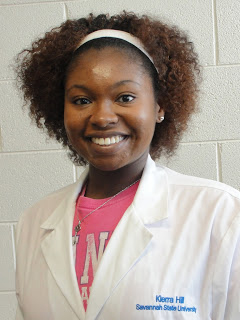
Student Spotlight : Kierra Hill

Kierra Hill
"My name is Kierra Hill, and I am a biology major in the College of Sciences and Technology (COST). I am a recipient of the MAGEC-STEM PLUS Scholarship, and I receive financial aid."

"Financial aid is a fundamental part of my matriculation here at Savannah State. Without the combination of my scholarship and financial aid, I would not be able to fund my education, and ultimately, attain my dream of becoming a neurologist. I am grateful for the opportunities afforded to me by my scholarship, as well as financial aid."

Through the MAGEC-STEM PLUS program, Kierra has been able to conduct research in the field of chemistry overseas in one of the most prestigious universities in China; Tianjin University, in Tianjin, China. She is a firm believer that aid in any form, whether it be in the form of a scholarship or financial aid, is very important in the success of a student determined to reach his or her goal of graduating.

Monday, June 8, 2015

Student Spotlight : Enow Ayuk

Enow Ayuk
Enow came to Savannah State University to pursue his goal of becoming a neurosurgeon.

Enow's grandfather - his inspiration - was an enthusiastic advocate of Enow's studies. He began showing signs of Alzheimer's, and after he passed in 2013, Enow was faced with an unsure academic future.

Before coming to Savannah State, Enow sat out for two semesters, unable to raise enough in financial aid to return to school.

In those months, he rededicated himself to his passion for science and decided he would work towards finding a cure for Alzheimer's once he returned to school.

Aware of the challenges ahead, he studied during the summer to be sure he was ready for fall. Enow became a Peach State Louis Stokes Alliance for Minority Participations (PSLSAMP) scholar and accepted Hope, research, and presidential scholarships.

It wasn't easy at first, but he realized that the opportunities are endless here at SSU.

This summer, Enow will study antibiotic-resistant bacteria through a research program at Alabama State.

And he knows that with determination and drive, anything is possible.